Angel Ortega, a teacher in New York, is dreading explaining to his students why he may no longer be able to teach next semester. Because his work permit as a recipient of Deferred Action for Childhood Arrivals (DACA) expired before his renewal application was processed, he is currently unable to work.
In Springfield, Ohio, Rose-Thamar Joseph now dreads driving. As an individual with Temporary Protected Status (TPS) from Haiti, the U.S. Supreme Court’s recent decision allowing the Trump administration to terminate her status means she will likely lose her driver’s license and work permit soon.
Ortega’s and Joseph’s stories are not isolated accidents. Across the country, TPS holders and DACA recipients are losing the ability to work, drive, and ultimately continue their lives in the United States. The administration’s attacks on people with temporary protections – from ending TPS designations, to DACA renewal delays and seemingly indiscriminate detentions and deportations – lay bare how vulnerable immigrants are without a clear, legal pathway to citizenship. This underscores the importance of a procedure currently underway in the U.S. House of Representatives that could provide a solution to protect TPS and DACA holders.
“Death by a Thousand Cuts”: The Supreme Court’s TPS Decision and the Attacks on DACA Recipients
Temporary Protected Status (TPS) allows individuals from certain countries with unsafe conditions to legally live and work in the U.S. On June 25, 2026, the Supreme Court decided that no court can review a Secretary of Homeland Security’s decision to terminate a TPS designation. The Court’s decision comes after former DHS Secretary Noem announced the termination of TPS for Haiti and Syria last year. It is expected to have ripple effects on all TPS-eligible countries, which may potentially be stripped of protection by this administration.
DACA recipients have also been under attack. Since summer of 2025, cases of DACA recipients being caught up in this administration’s detention and deportation agenda surfaced in news reports. Starting in February of this year, DHS revealed in various letters to Congress that hundreds of DACA recipients have been detained and that at least 86 DACA recipients have been deported. We have also heard countless cases of DACA recipients experiencing renewal delays. All this while we wait to see what the courts will do next on DACA.
Neither DACA nor TPS provide recipients with a pathway to lawful permanent residence or citizenship. If TPS is terminated for a certain country, the people protected by that designation will revert to their previous immigration status. If the person is undocumented, they may become at risk of detention and deportation. Similarly, if DACA recipients experience even a short period without DACA due to renewal delays, they lose their ability to work in the U.S. and become at risk of detention and deportation. Ultimately, the Supreme Court TPS ruling and the attacks on DACA demonstrate the fragility of temporary protections without a pathway to citizenship.
The Dream and Promise Act
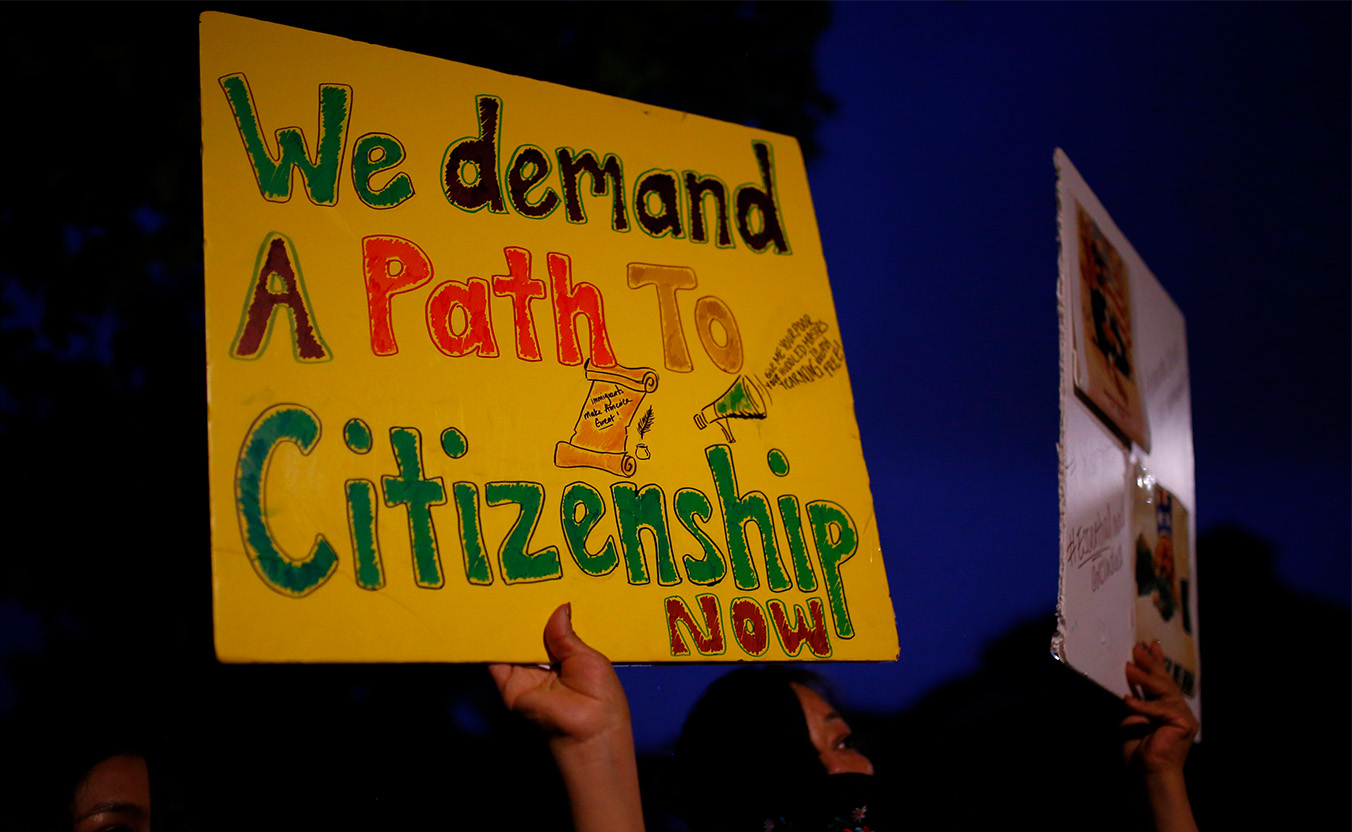
As TPS and DACA holders anxiously plan their lives around court decisions and USCIS processing times, advocates have drawn attention to the Dream and Promise Act. The bill, which was most recently reintroduced in the House by Rep. Sylvia Garcia, would put DACA recipients, immigrant youth, and TPS holders who meet certain requirements on a pathway to citizenship. A pathway to citizenship allows individuals the ability to fully participate in the country they call home, without the fear of detention and deportation.
A Vehicle for Change: The Discharge Petition
The Dream and Promise Act has not been put up for a vote by the full House of Representatives since its reintroduction last year. That is where a discharge petition comes in. When the House Speaker refuses to schedule a vote on a bill, House members can force a vote if 218 members sign on to a discharge petition.
A recent inspiring and successful discharge petition was Rep. Ayanna Pressley’s petition on a bill that would extend TPS for Haitians by three years. The success of that discharge petition has given advocates and immigrant communities hope for advancing important legislation that remains stagnant due to divisive party politics. With so much at stake for DACA recipients and TPS holders, further inaction on the Dream and Promise Act could lead to widespread job losses, detentions, and deportations. For people like Angel Ortega and Rose-Thamar Joseph, the waiting game is a dangerous one.
If you stand with DACA recipients and TPS holders like Angel and Rose-Thamar, join us in urging your House representative to sign on to the Dream and Promise Act discharge petition TODAY!
Tell Congress: Sign the Dream and Promise Act Discharge Petition
We need 218 signatures on the discharge petition to force a vote on the Dream & Promise Act - a bill that would provide a pathway to citizenship for millions.
Contact Your RepsSteps to Take if Your DACA Renewal Is Delayed
Updated Jul 7, 2026 This resource provides guidance for DACA recipients on renewing their status and employment authorization documents, including steps to take if there are delays in processing their renewal applications. Originally published in July 2016. This...
What does the BIA Decision Mean for DACA recipients?
Published Apr 30, 2026 If someone with DACA gets arrested and detained by immigration or other law enforcement and ends up before an immigration judge, the judge may now look into their case more closely to comply with the BIA decision. However, the decision does not...
Tell Your Representatives in Congress to Support the Dream and Promise Act Discharge Petition
Jul 23, 2026