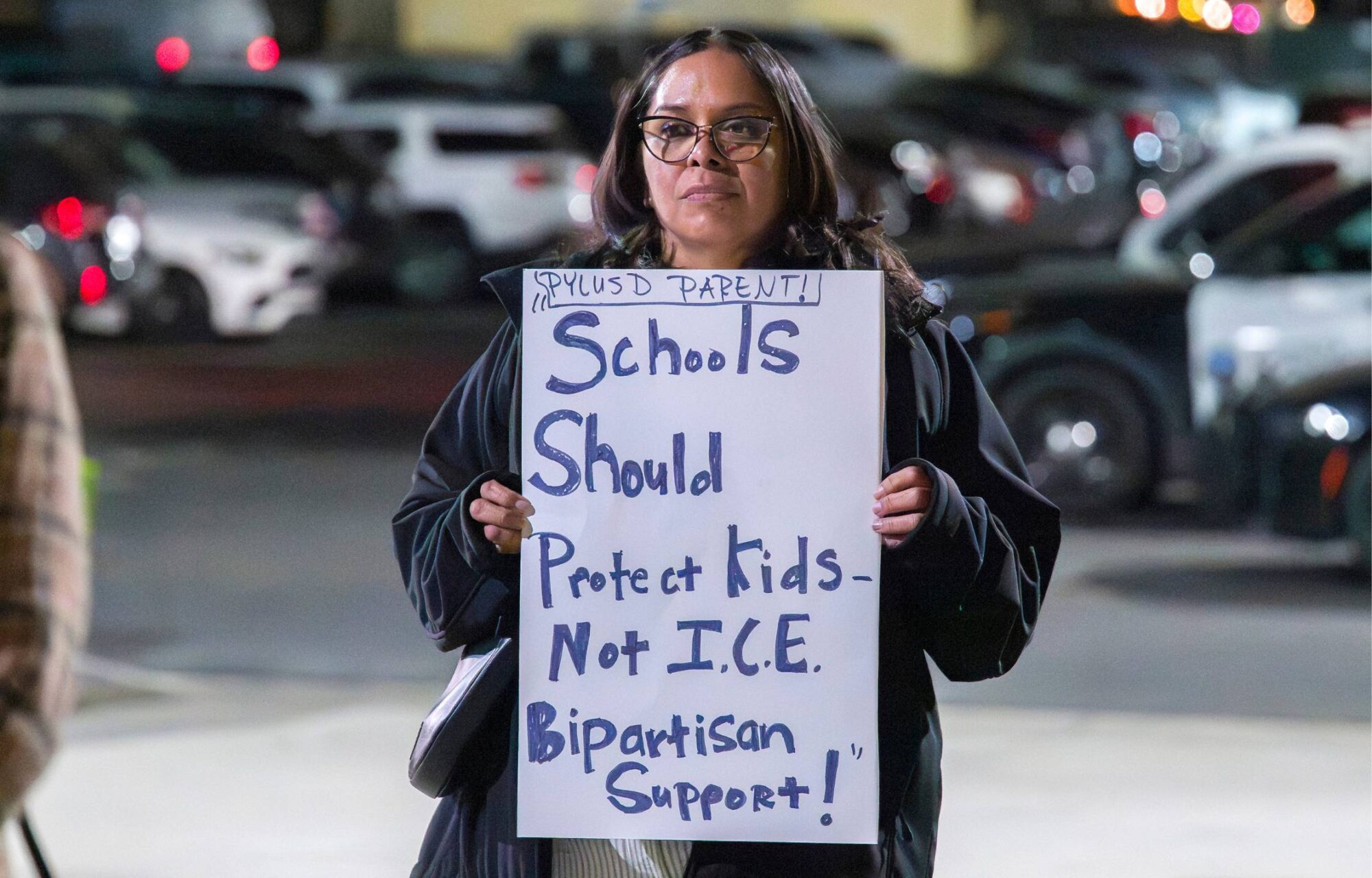
Last fall, when immigration arrests reached near record levels during President Trump’s failed National Guard deployment in Portland, Oregon, local nurses sounded the alarm. They declared that the surge in federal agents put the city’s hospital patients at risk and, alongside their community members and lawmakers, made Oregon one of at least 10 states to pass laws focused on limiting immigration enforcement from sensitive areas that form the backbone of community, like hospitals, places of worship, public libraries, and schools.
The laws these states have passed are a direct response to the Department of Homeland Security ending its long-standing policy to avoid enforcement in these locations, which the Obama administration introduced in 2011. This was to ensure that entire communities would not be harmed or disrupted in shared spaces.
Workers were among the first to see how fear of enforcement reduced participation in their community spaces. In response, nurses across the country condemned increased immigration enforcement as a threat to public safety. The chairperson of the American Medical Association warned that it was detrimental to hospitals. Teachers’ unions, parents, and community members joined a lawsuit challenging the policy change, citing the fear they heard from students and how it interfered with safe and effective classrooms.
Coalitions of advocates have continued to call on leaders to address the negative impact immigration enforcement has had on their cities. But lawmakers have also seen these impacts for themselves. A series of measures, including a new sensitive locations policy, passed in Illinois following the Fall 2025 deployment of immigration enforcement in Chicago.
Lawmakers in Oregon said they were motivated by the case of seven-year-old Diana Crespo and her family, who were detained in early 2026 and sent to the South Texas Family Residential Center in Dilley, Texas. Officers arrested the family in the parking lot of an urgent care hospital where Diana was brought to treat a nosebleed.
Although state lawmakers may not be able to control the actions of federal immigration officers, they have used their power to put up roadblocks that can stop agents from entering non-public areas. These laws require certain locations under the state’s authority to deny access to immigration officers unless compelled by a judicial warrant or other circumstances. Some states impose financial consequences when facilities fail to do so. Between the end of 2025 and the first few months of 2026, new “sensitive locations” laws have passed in:
- California
- Colorado
- Connecticut
- Delaware
- Illinois
- Maine
- Maryland
- New Jersey
- Oregon
- Virginia
And interest in this legislation is growing. In the last six months alone, legislators have introduced bills in 23 states, including some of the above. Not only do these laws support the health and safety of local communities, but they also represent popular political positions. Polling conducted by NILC, academic researchers, and the Protecting Immigrant Families Coalition show that a significant majority of respondents disapprove of immigration enforcement in hospitals and schools.
Immigrant rights groups and allies can continue to advocate for policies that protect sensitive locations as part of a larger set of reforms to protect their communities. Residents can also demand that their attorneys general or government agencies issue guidance on how to protect spaces. People who work in hospitals or schools, or even members of a faith community and other community spaces, can advocate for themselves and their neighbors. They can work with administrators or leaders of those spaces to adopt policies that protect privacy and limit access for immigration enforcement purposes.
While immigration is a sensitive topic in various areas of the country, protecting shared community spaces from invasive questions, aggressive removal tactics, and other aspects of immigration enforcement is one value that legislative leaders and local communities can and should come together on.
What Immigrants Need to Know About the New ACA Eligibility Restrictions
Published Oct 9, 2026 Starting next month, Congress has ensured that immigrant families will struggle more to afford health coverage and necessary care.
Cómo ejercer su voto de manera segura: guía para ciudadanos naturalizados y todo tipo de votantes habilitados
Published Oct 8, 2026 Esta guía está diseñada para ayudar a los votantes habilitados, incluyendo a los ciudadanos...
FAQ: The Federal Government Wants to Deny Refundable Tax Credits to Many Immigrants
Updated Oct 7, 2026 The U.S. Treasury and IRS have proposed a new rule to radically change who can receive vital tax credits, excluding many immigrants who currently work, pay taxes, and meet existing eligibility requirements. This resource answers questions about...
U.S. Military Likely Violated Posse Comitatus Act During 2025 Immigration Raids in California, New Document Shows
Published Oct 7, 2026 WASHINGTON — A U.S. military document newly obtained by the National Immigration Law Center seems to reveal a previously unknown Trump administration violation of the Posse Comitatus Act during its deployment of federalized National Guard...
States Are Saying No to ICE in Hospitals & Schools
May 15, 2026 In response to public outcry across the country, states are increasingly introducing "safe locations" laws to protect schools, hospitals, and other spaces that form the backbone of a community from immigration enforcement.