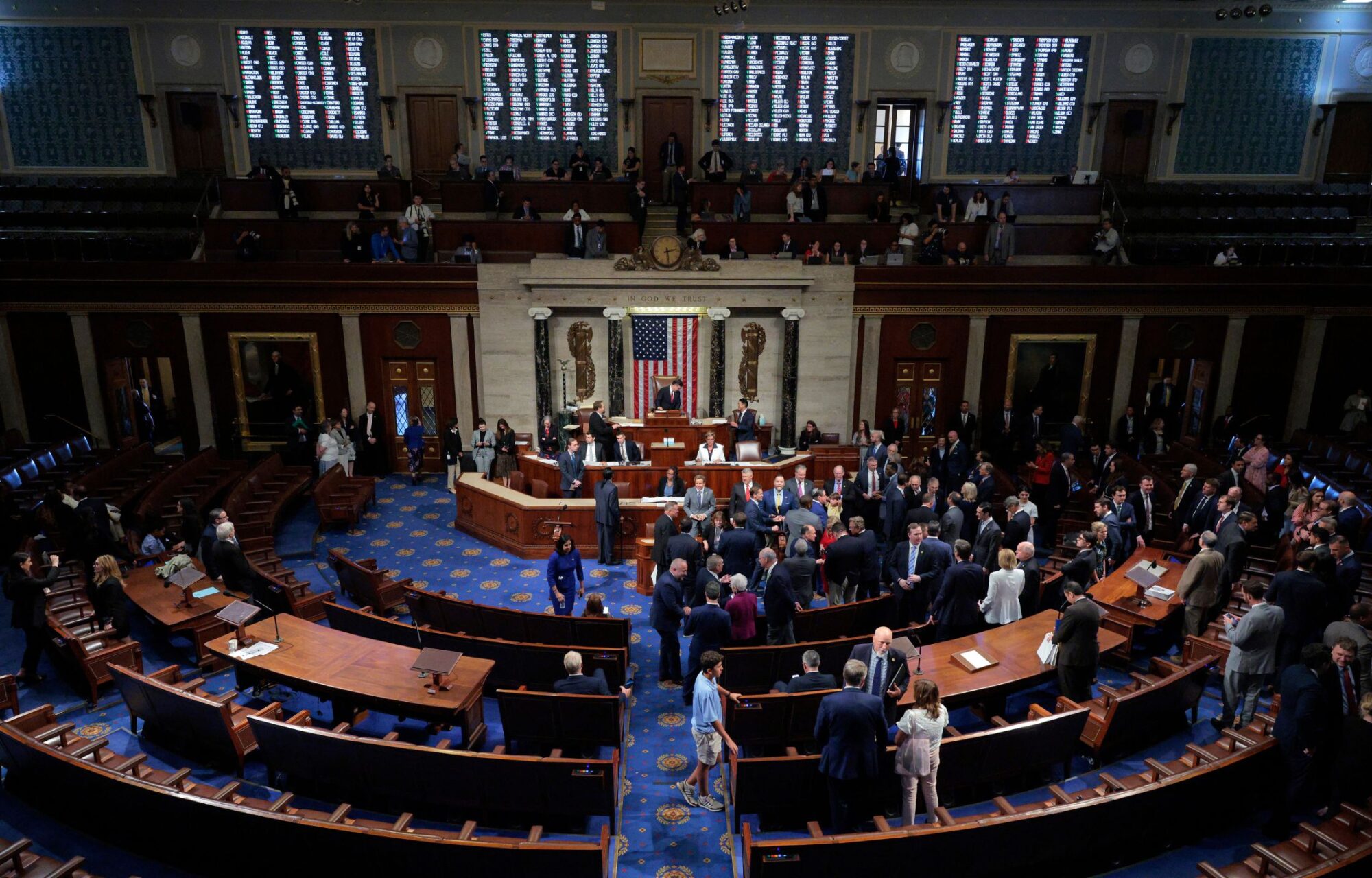
This is the first of a blog series that will examine how the 2025 reconciliation act funding is fueling an inhumane immigration detention machine that threatens our basic humanitarian and democratic values. In this series, we will lay out how various federal and state actors are using the funding to attack our democracy, increase authoritarianism, expand the prison/military industrial complex, and negatively impact communities, families, and individuals.
On July 3, Republicans in Congress and President Trump elected to trade away billions of dollars for health care and anti-poverty programs to fund an unprecedented expansion of immigration enforcement, specifically in the form of detention. We are only beginning to see and feel the impacts of this tradeoff of care for cages, but reports are already rolling in.
For a clear illustration of this trade, we can look to a corner of rural Nebraska. The town of Curtis, Nebraska recently lost its rural hospital center following the 2025 reconciliation act’s enactment. The CEO of Community Hospital said in his statement about the closure that the anticipated federal funding cuts to Medicaid were a major deciding factor in closing their clinic. Community Hospital’s headquarters is located in McCook, Nebraska – about 45 minutes from Curtis. Trading away critical care for increased detention, the only investment that appears to be on the table is a new immigration detention site at the McCook Work Ethic Camp. The state of Nebraska intends to move the nearly 200 Nebraskans currently housed at the McCook facility for rehabilitative programming into other prisons, converting the facility into an immigration jail that would house up to 300 immigrants on any given day.
We all know that money talks – if it wasn’t clear to see before, this bill shows that the Trump administration and the members of Congress that voted to pass the 2025 reconciliation bill only have one goal: cruelty at any cost to deter future immigrants and push out those already here, no matter their ties to the country.
As a country, we want everyone to be healthy and have access to the care they need. We all want our kids to go to school and learn. We want everyone in this country to have the tools they need to thrive. The government had the opportunity to invest in health care, create jobs, and invest in our children’s education. But instead of using our taxpayer money to make those visions a reality, the reconciliation act slashed funding for basic safety net programs like Medicaid and anti-poverty programs and redirected more than $150 billion towards fueling Trump’s anti-immigrant agenda. Here’s a quick breakdown:
- $45 billion to detain immigrant adults and families
- $75 billion in enforcement and surveillance funding for border communities, including $47 billion for construction of the border wall
- $32 billion for immigration agents and operations related to enforcement and deportation
- $13.5 billion for state and local enforcement of federal immigration law
- $1 billion to divert military resources towards border militarization
This unprecedented slush fund for detention and enforcement comes at the expense of everyone’s wellbeing and economic stability.
The decisions made in the reconciliation bill spell out a dark future for the country: Hospitals will close. Millions of Medicaid recipients will lose access to their health care. The national deficit will balloon by $3 trillion over the next 10 years.
Meanwhile, the $45 billion awarded to ICE to jail immigrants is 13 times the government’s annual budget for immigration detention, which was already at a record high. The funding allocated to detention in the reconciliation bill is a moral failure and an existential threat.
State of Detention
The alarm has been ringing for decades about the inhumane, unsanitary, and deadly conditions inside immigration detention sites. From reports of rotten food, physical abuse, and over 230 documented deaths since 2003, the U.S. immigration detention system has been plagued with crisis-level concerns for years. Years of investigation from the media, advocates, and members of Congress (PDF) into sites across the country document a disturbing pattern of abuse: physical and sexual abuse, denial of medical care (including mental health care), a lack of acceptable food and water, and restricted to non-existent access to legal counsel.
The history of ICE detention is rife with abuse, but we fear things are only going to get worse. With disturbing reports from inside detention sites documenting the rise in suicide attempts and deaths from medical neglect, it is no surprise that 2025 is on track to be one of the deadliest years on record.
The Trump administration’s expansion is unlike anything we’ve ever seen before: as of publication, ICE is holding 58,766 individuals in detention – with no sign of slowing down. As the Administration continues to carry out its goal of mass enforcement, advocates and organizers predict that the situation is about to get much worse.
There have been several stark developments as the Trump administration pushes for mass expansion, including:
- The Everglades Detention Camp in Ochopee, Florida has been universally condemned as a human rights disaster – yet Trump officials still consider it the blueprint for future sites.
- The opening of the largest federal detention site at Fort Bliss in El Paso, Texas is a massive expansion in a state that hosts over 20 detention sites. The soft-sided facility (a tent-like structure not designed for housing people for long periods of time will hold at least 1,000 individuals initially, with plans to expand capacity to 5,000.
- Military facilities are being converted into detention sites across the country, including Camp Atterbury-Muscatatuck in Edinburgh, Indiana; Fort Bliss, in El Paso, Texas; and Joint Base McGuire-Dix-Lakehurst in Trenton, New Jersey.
- An ACLU investigation revealed plans for six potential new sites in Colorado – marking a 600% increase in detention in the state.
Private prison companies, namely GEO Group and CoreCivic, currently manage sites that hold 90% of detained immigrants, meaning there is even less transparency into the conditions and less oversight into their management than government-run facilities.
Small rural towns are the prime target for new and expanded immigration detention sites. Private prison corporations and the federal government are predatory, promising economic revitalization and an influx of jobs to areas struggling with high unemployment and budget shortfalls. But in reality, these sites cause more harm in the surrounding community than good.
The Trump Administration calls H.R. 1 the One Big Beautiful Bill (OBBBA), but the truth is that this bill is far from beautiful. It is ugly, shortsighted, and it will take generations of advocacy to undo the pain it is causing for immigrants and their families. More immigration detention means more parents ripped away from their children, economic and health instability for the families left behind, and more people placed in life-threatening situations hidden behind the walls of detention.
As time goes on, it will become even more important to have a written record that documents the scope, harm, and significance of the reconciliation act’s funding for detention. In the next few entries to this blog series, we will examine how the act’s funds impact ICE-run sites, private-run sites, state-run sites, and detention facilities at military sites. Using first-hand accounts, news reporting, and research into detention conditions, we will continue to witness the devastating impacts of reconciliation act funding.
NILC stands in solidarity with communities organizing to protect our most vulnerable community members from the harms of this law while we work to rebuild in the future.
[for more on OBBBA: The Anti-Immigrant Policies in Trump’s Final “Big Beautiful Bill,” Explained – NILC]
[for more on Detention: New Funding Increases Immigration Enforcement – NILC]
The Door v. Edlow
This lawsuit challenges the government’s broad attempts to rush the deportation of unaccompanied children in violation of their civil rights and U.S. law.
Last update: Oct 15, 2026
Advocates for Unaccompanied Children File Lawsuit to Stop Federal Government’s Fast-Track Deportation Scheme
Published Oct 15, 2026 Legal service providers representing immigrant children filed a challenge in federal court today to stop the cruel and unlawful scheme to fast-track children’s asylum cases.
Benefits for Immigrant Survivors of Trafficking, Domestic Violence, and Other Serious Crimes in California
Updated Oct 6, 2026 This resource reviews the two categories of immigrants covered by California's SB 1569 (trafficking survivors and U visa applicants/holders), the benefits they may receive, and what they need to show in order to get these benefits. Originally...
They Traded Care for Cages: Documenting the Harm of the 2025 Reconciliation Act
Oct 15, 2025 This is the first of a blog series that will examine how the 2025 reconciliation act funding is fueling an inhumane immigration detention machine that threatens our basic humanitarian and democratic values.